
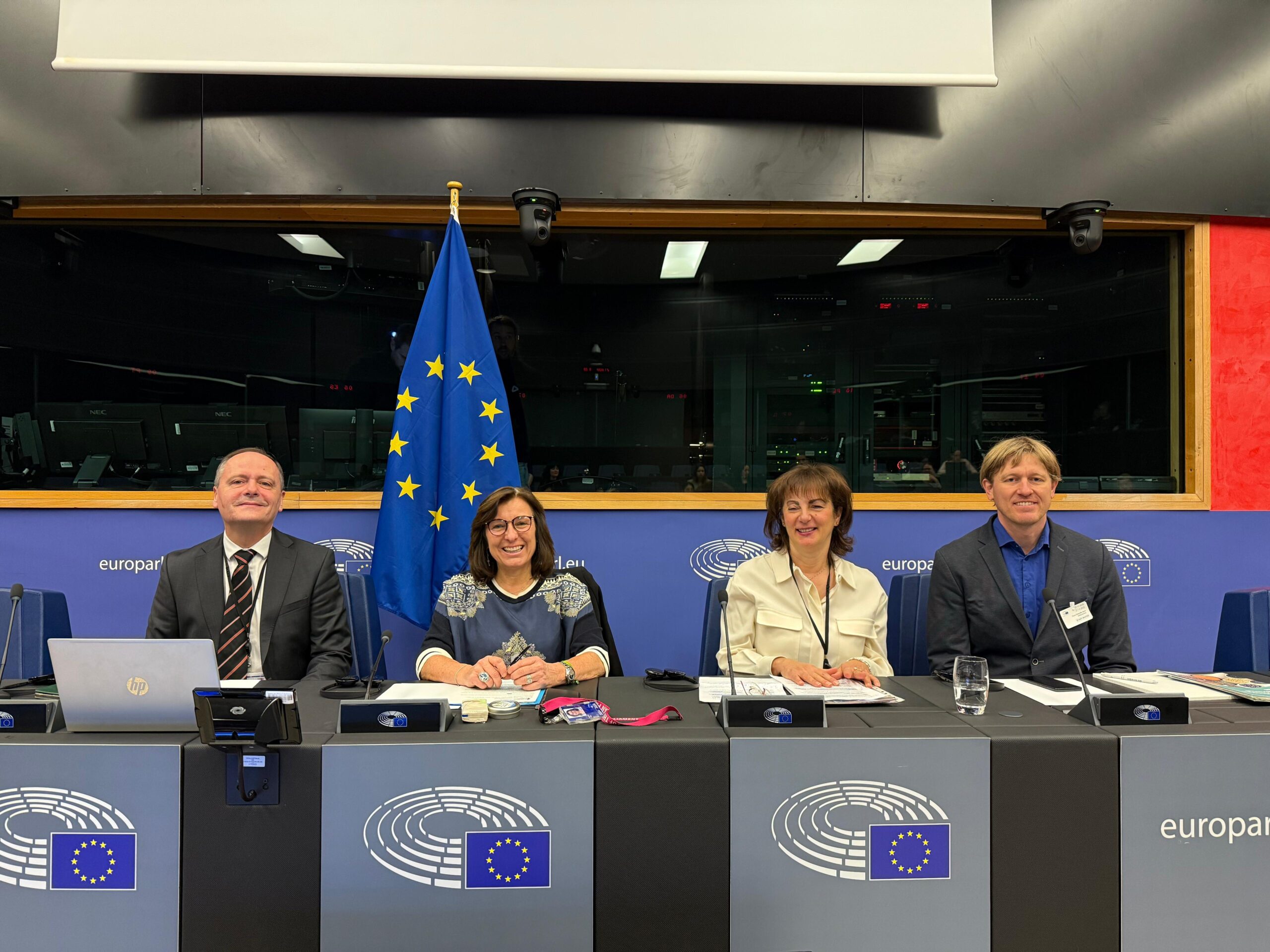
Strasbourg, 27th of November 2025. The Animal Welfare Intergroup at the European Parliament hosted a discussion in Strasbourg on how an EU Action Plan for Plant-Based Foods and a stronger focus on protein diversification can pave the way for more animal-friendly diets. Experts from Denmark and Greece outlined successful Member State experiences and the clear need for EU-level action.
Rune-Christoffer Dragsdahl, Vice-Chair of the Danish Plant-Based Food Grant, presented Denmark’s Action Plan for Plant-Based Foods, alongside the grant which supports the plan and totals EUR 170 million until 2030. Examples of funded initiatives were highlighted, spanning across the entire value chain: from training chefs in plant-based cuisine to promoting the cultivation of Danish legumes.
Denmark’s success relies on a strong focus on value-chain development and a collaborative culture around the plant-based agenda, leading to a broad support in parliament and civil society, from farmers to vegetarian organisations.
Currently holding the EU Presidency, Denmark has placed the potential for an EU Action Plan for Plant-Based Foods and a common protein strategy high on its agenda.
Olga Kikou, Founder and Director of Animal Advocacy & Food Transition, presented an EU perspective, stressing that Europe’s plant-based sector remains underdeveloped despite clear potential for growth. Unlocking its full potential requires coordinated EU action to boost both production and consumption – supported by adequate funding.
She presented the Blueprint for an EU Action Plan for Plant-Based Foods, a policy brief endorsed by over 70 NGOs, including consumer and environmental groups as well as researchers and farmers’ organisations. This document outlines key policy measures that an EU Action Plan could address.
The event, chaired by MEP Tilly Metz (Greens/EFA) brought together a diverse group of MEPs, including Jessika van Leeuwen (EPP), Sigrid Friis (Renew), Marianne Vind (S&D) and Per Clausen (The Left).
Despite differences in opinion, there was a broad consensus in the room that the Danish approach, focused on dialogue and cooperation and aimed at supporting the plant-based value-chain development while building a new industry, was a very inspiring and interesting case.