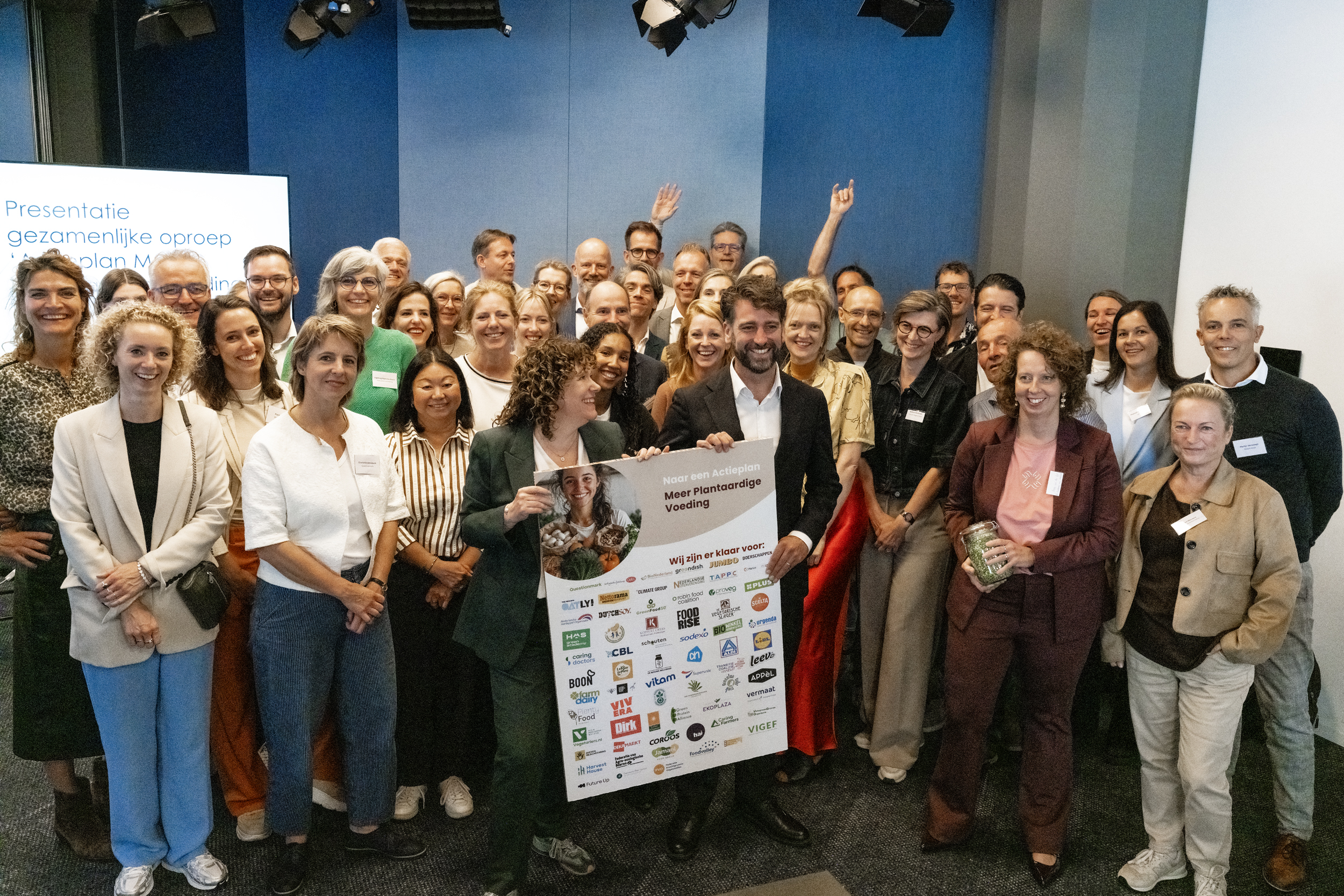
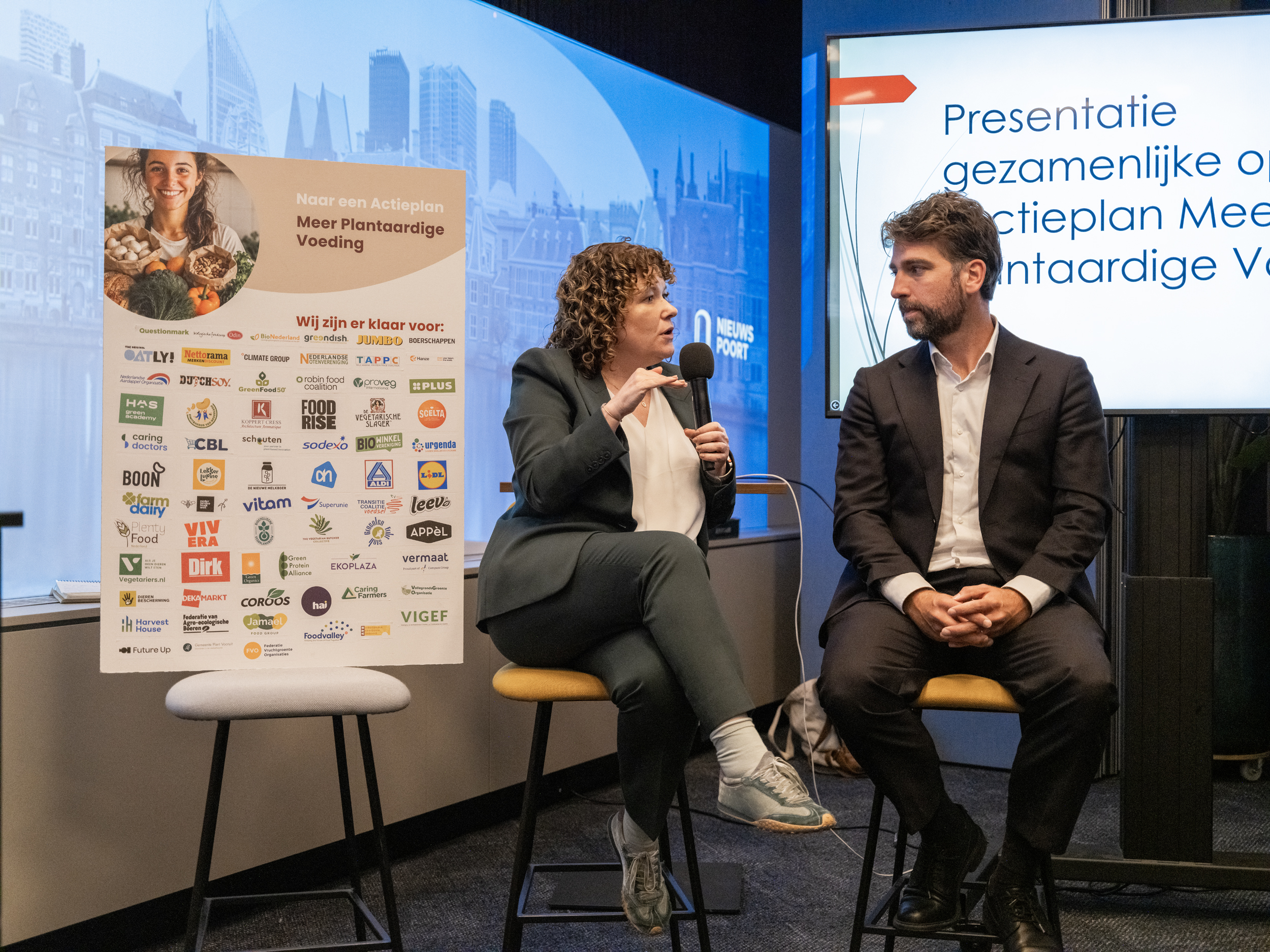
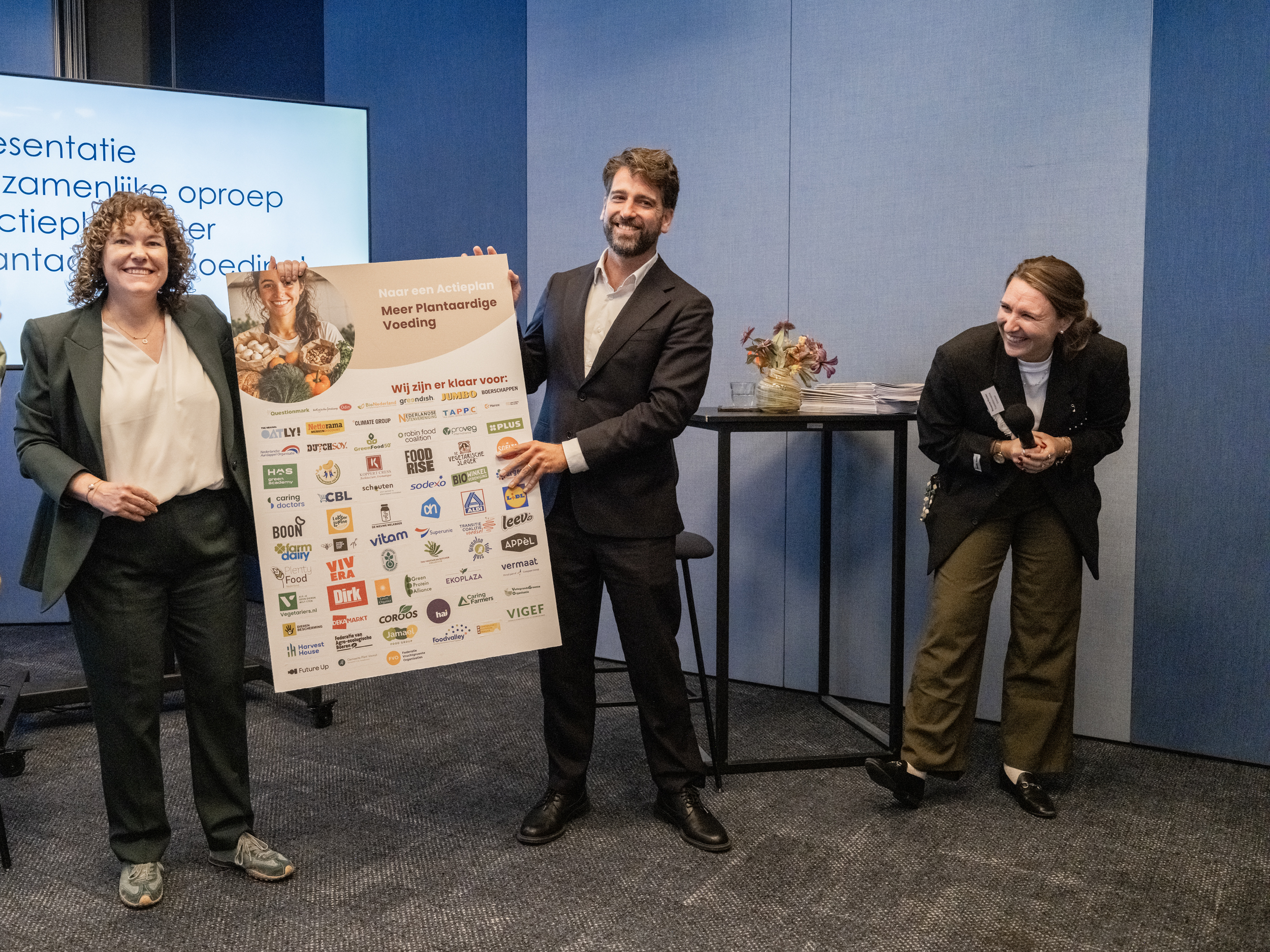
The Hague, 10th of September 2026. 46 organisations representing farmers, industry and civil society, including health and nutrition bodies, backed a call for a Dutch Action Plan for Plant-Based Foods, which was delivered to Dutch government politicians Joris Lohman (CDA) and Anne-Marijke Podt (D66) at an event in the Conference Hall of the Dutch government.
The broad coalition, centered around the Food Transition Coalition, calls for the Netherlands to stimulate demand and production, focus on research and exports, and set up a Plant-Based Acceleration Fund of €65 million per year for eight years. The plan could help deliver on key objectives for the Netherlands, including healthier diets and climate goals, while creating opportunities for farmers and industry.
The proposal has taken a lot of inspiration from the Danish Action Plan for Plant-based Foods and Plant Based Food Grant, including a quote from the former Danish Minister of Agriculture, Food and Fisheries, Jacob Jensen (V), stating that “Plants are the future”.
“The Danish Plan has really inspired us in our approach and our ambitions, including the structure and what should be done to really build up a robust ecosystem around plant-based foods. Now we have a really broad coalition. And the next step is to get the policy level to follow suit,” says Bas Geerts, projectmanager More Plantbased Foods at the Dutch Transition Coalition Food
The Action Plan could deliver on key government priorities
In January, the government coalition consisting of D66 (Democrats 66), VVD (People’s Party for Freedom and Democracy) and CDA (Christian Democratic Appeal) presented their “Getting to work – Building a better Netherlands” agreement, setting out the government’s main political priorities and plans for the 2026–2030 parliamentary term. The agreement specifically mentions food and agriculture, and a wish to stimulate demand for healthy, sustainable and organic food.
At the launch event both Joris and Anne took the stage, and both agreed on the need to develop the food system, underlining that there also needs to be a market.
“Our proposal is a direct way to support the ambitions and directions set out by the government. Including to stimulate market uptake.” says Bas Geerts.
Danish experience focuses on working together to reach shared goals
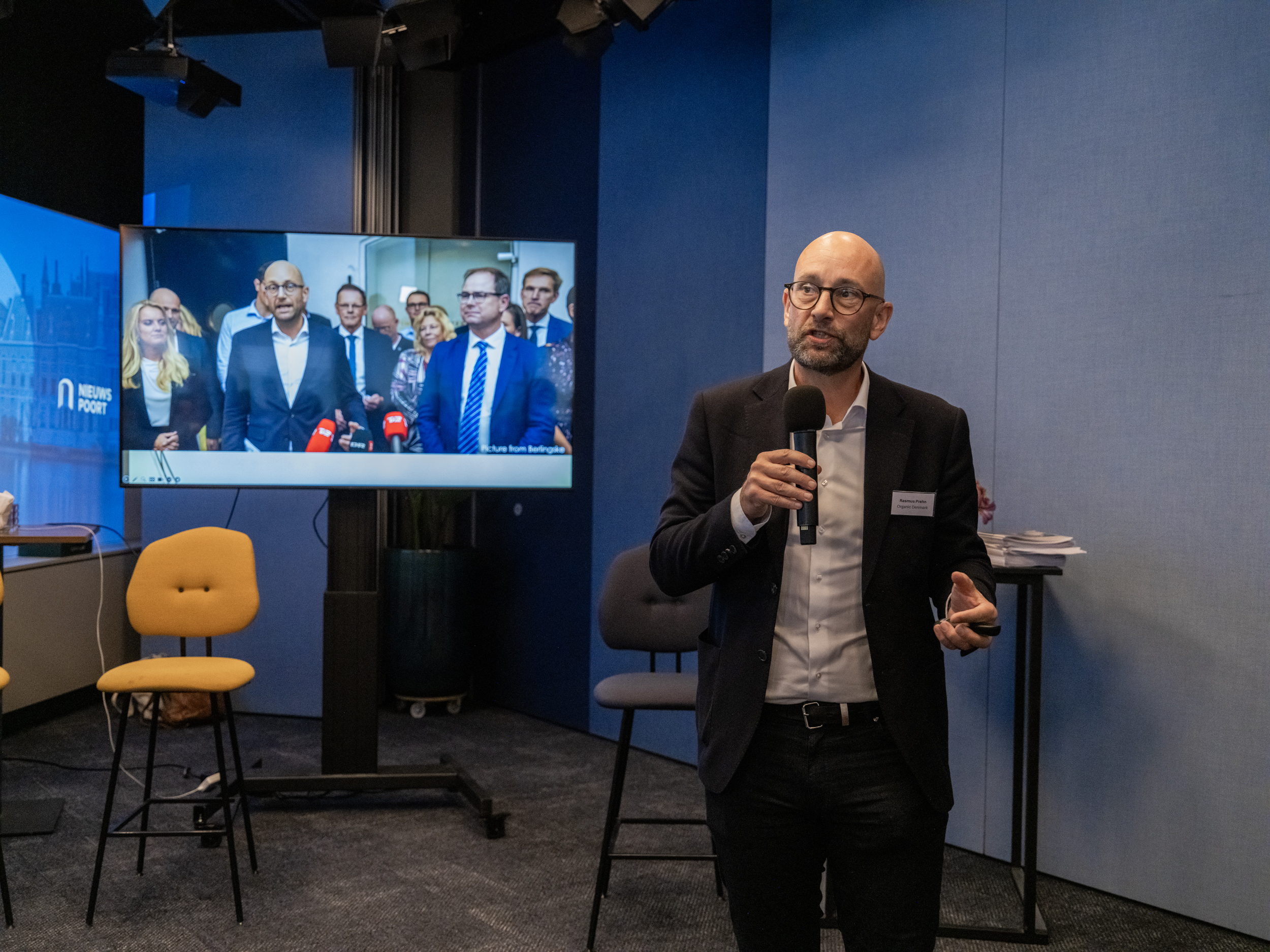
Rasmus Prehn, CEO of Organic Denmark and former Danish Minister of Agriculture, Food and Fisheries, when the Danish Action Plan and Fund were agreed in 2021, was invited to The Hague to give insights into how he, as minister, secured a large majority, counting 98% of the Danish Parliament, in support of the Grant and the Plan.
“It’s all about dialogue and finding common ground. I firmly believe that focusing on plant-based foods as a business to develop to make money, as well as the benefits to society of organic and plant-based production and consumption, such as health and autonomy, are key to getting action plans across the EU,” says Rasmus Prehn.
In the Danish Plant-Based Food Grant, 50% of projects need to be focused on organic plant-based. The ambition to think the two businesses together – plant-based and organic – was mirrored in the coalition proposal, stating that one third of the resources from the proposed Plant-Based Acceleration Fund should be spent on organic plant-based food production.
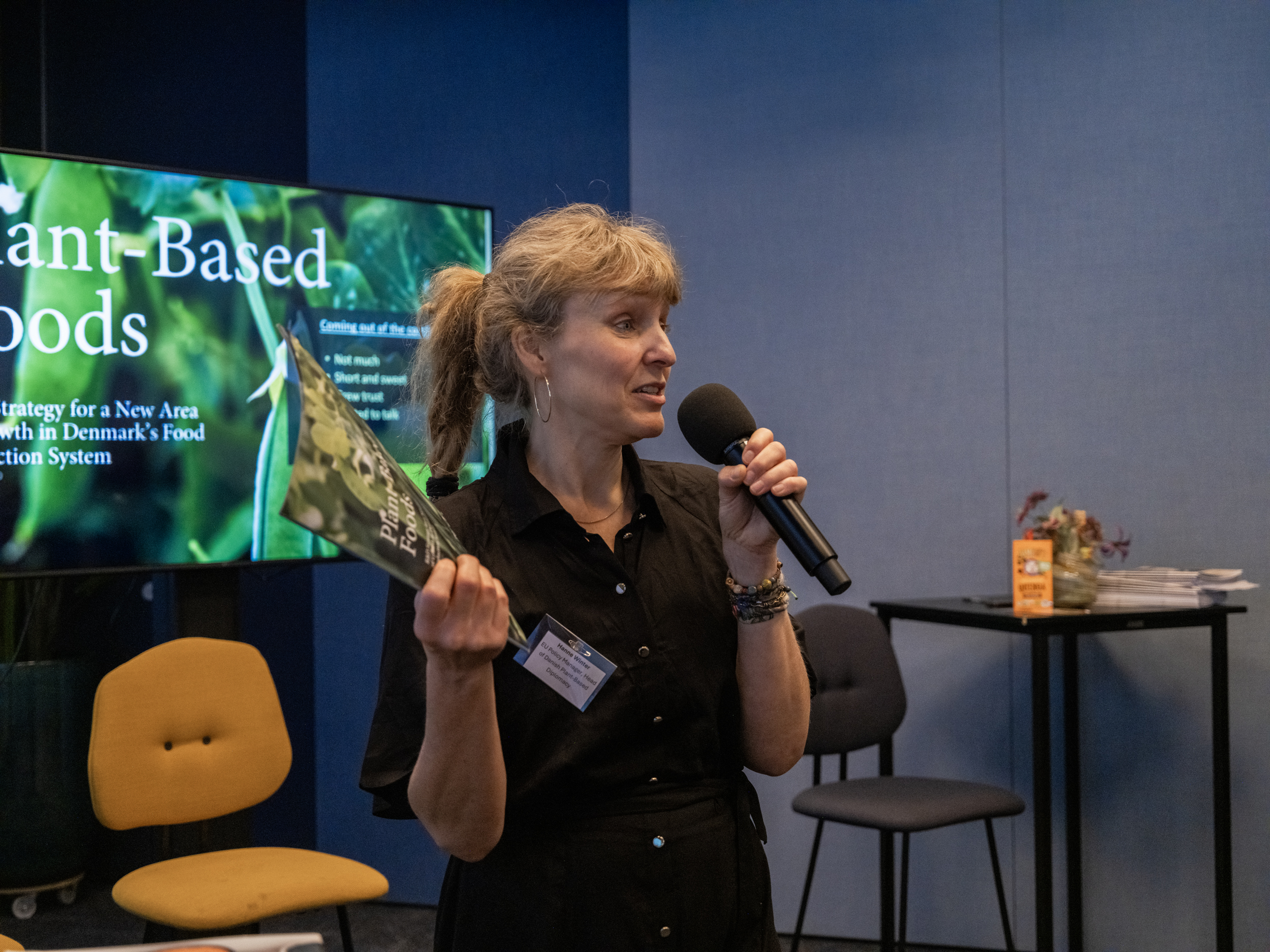
Participation in the event of the Danish speakers is part of an EU project, which has received grants from the Green Development and Demonstration Programme (GUDP) under the Ministry of Food, Agriculture, and Fisheries of Denmark.